Compare
Acrobatics or a banquet?
An hour of acrobatics in Dongcheng or an imperial-themed banquet with opera: length, food, language, cost and who each evening suits.
Book the acrobatics hour ↗Quick answer
Choose the acrobatics if you want a short, lively hour that needs no Chinese and suits children, on a modest budget. Choose the imperial-themed banquet if you want a long, slow evening with dinner, costume and excerpts of Chinese opera, classical dance and traditional theatre. The banquet fills some two and a half hours, with a bill to match. The acrobatics lasts one hour. Many visitors with two free evenings could reasonably do both.
The short answer
These are two different kinds of evening that happen to compete for the same free night. The acrobatics is a seated, one-hour show of physical skill: quick, loud, family-friendly and inexpensive. The banquet is a themed dinner lasting some two and a half hours, built around the life of Qing-era aristocrats, with costume and live performance woven through the meal. If time and money are tight, or children are along, the acrobatics wins. If the evening itself is the event, and you want dinner and atmosphere in one booking, consider the banquet. With two free evenings, there is a good case for doing both, on different nights.
Two different evenings
Think of the acrobatics as a performance you watch and the banquet as an occasion you take part in. At the acrobatics you sit in a numbered seat in a theatre and the troupe does everything; your only job is to watch, wince and applaud. At the banquet you sit down to eat, you are dressed for the part, and short performances arrive as the evening unfolds. One is about spectacle and nerve; the other is about atmosphere, food and a slower pace. Neither replaces the other, so the decision rests on the kind of night you are after rather than on which is better.
Length and pace
The acrobatics lasts one hour from first act to bows, which leaves time for dinner elsewhere and an early night. Acts follow one another quickly, so there are few pauses. The banquet takes some two and a half hours; it is the whole evening rather than part of it, and the meal sets its rhythm. For travellers who have walked the Temple of Heaven or the Forbidden City that day, the shorter option is often the kinder one. For a slower night with nothing after it, the banquet's length is part of its appeal, and there is time to talk between performances in a way that a theatre seat never allows.
What you watch
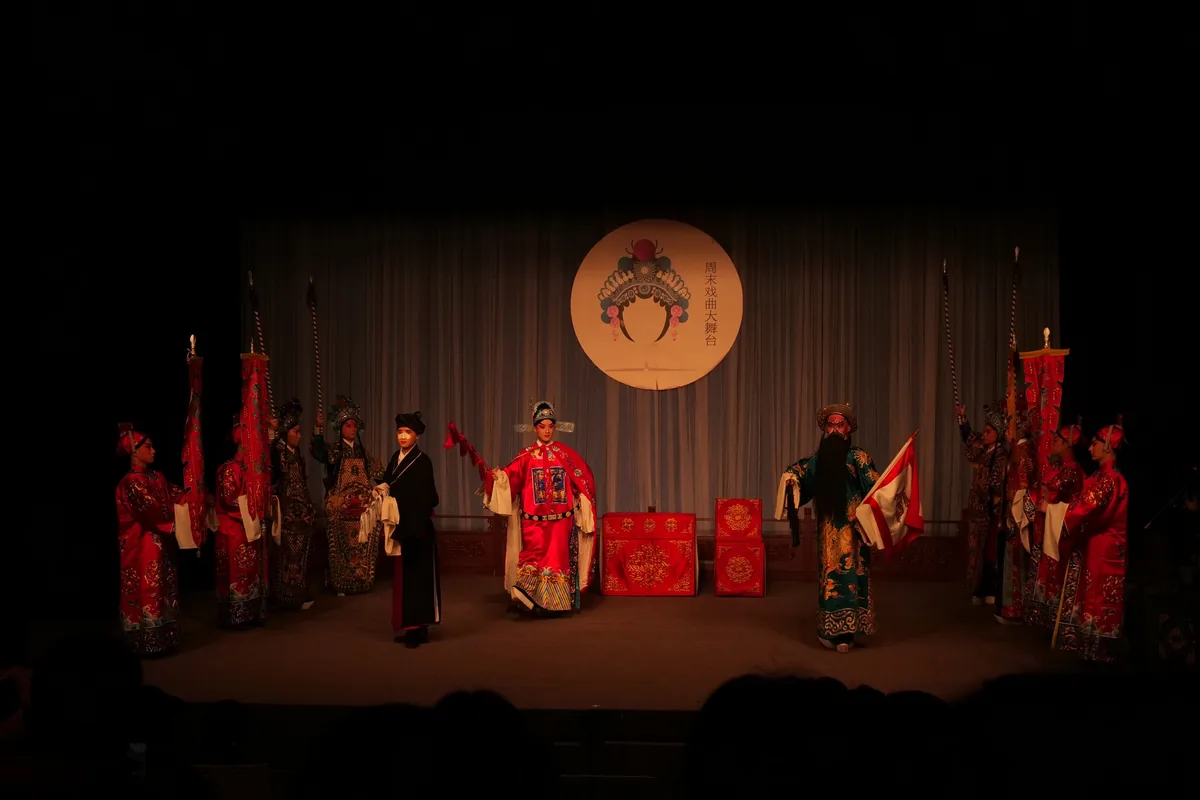
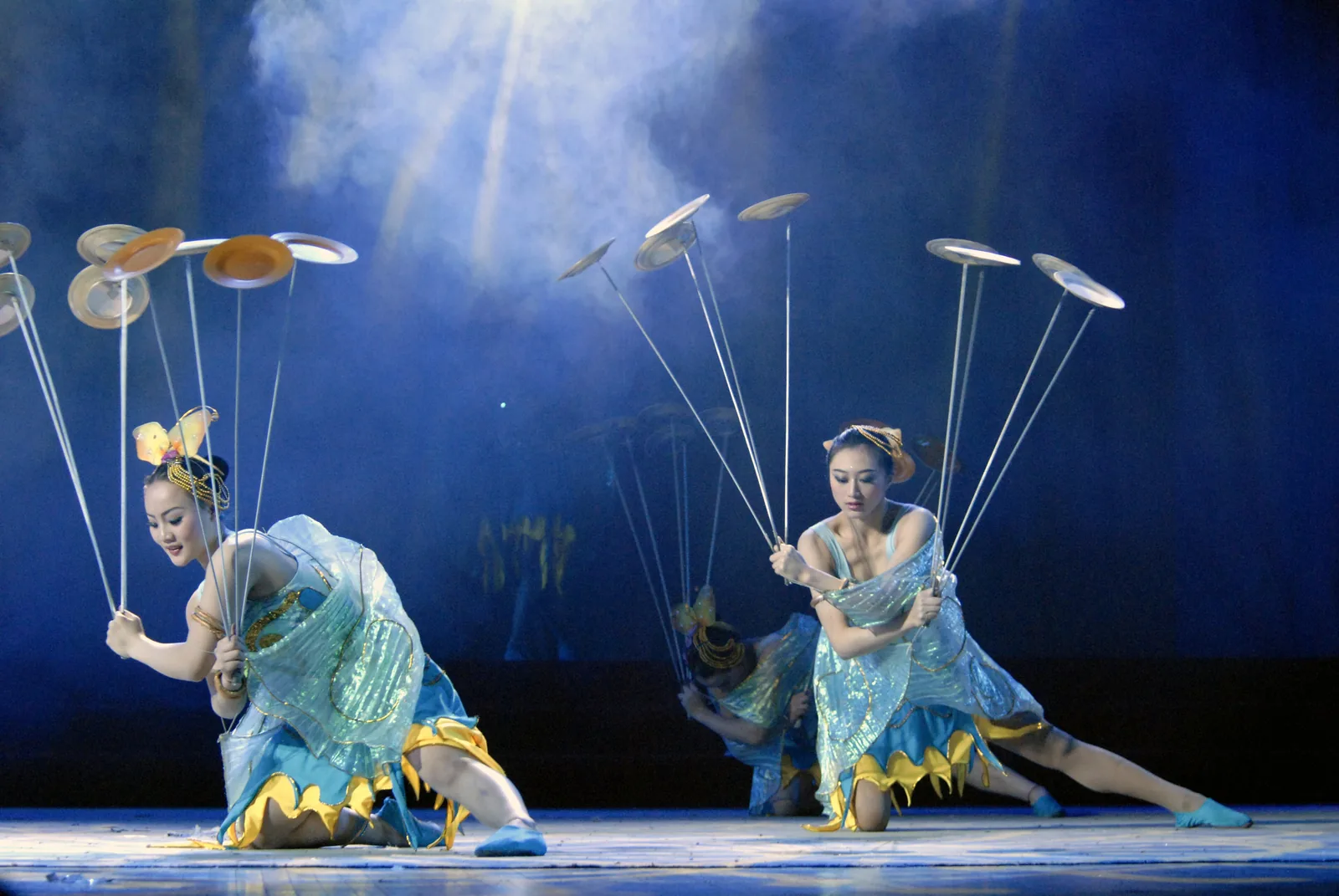
At the acrobatics you watch a run of acts built on balance, strength and flexibility: contortion, spinning plates, hoops, high balances. The disciplines go back a very long way in China; Wikipedia traces variety shows to the Qin dynasty or earlier. At the banquet the performances are excerpts of Chinese opera, classical dance and traditional theatre, presented alongside the meal. Chinese opera takes many regional forms. Kunqu, among the oldest, combines music, dance, poetry and acting, says Wikipedia, and UNESCO named it among its Masterpieces of intangible heritage in 2001. Expect excerpts rather than a complete work at a dinner.
The novel behind the banquet
The banquet takes its theme from Dream of the Red Chamber, the 18th-century novel by Cao Xueqin that Wikipedia counts among the Four Great Classic Novels of Chinese literature. The book follows the rise and decline of a family much like Cao's own in High Qing China, and it is known for its picture of the period's aesthetics, lifestyles and social relations. Cao worked on it from the 1740s until his death, and it was first printed in 1791. That world of grand households and their banquets is what the evening sets out to evoke. You do not need to have read the novel; it simply explains the costumes and the setting.
Food and drink
The acrobatics is not a dinner show, so plan to eat before or after. Dongcheng has no shortage of places to do so, and one hour leaves plenty of evening for a proper meal, whether that is near the theatre or back near your hotel. The banquet includes an imperial-style dinner as part of the booking, which is a large part of what you pay for, and the food is woven into the theme rather than served on the side. If food matters to you, or your group wants one booking that covers the whole night without a second plan, that tips the balance towards the banquet.
Language
Acrobatics has no dialogue, which is why it works so well for international visitors and children: everyone in the hall understands a dropped plate or a perfect landing. Opera is sung in Chinese, and excerpts of traditional theatre lean on words, so at the banquet the dance, music, make-up and costume carry more of the meaning for visitors who don't speak the language. If you love the sound of Chinese opera, that is no barrier, and the excerpts are short. If you want everything to be instantly clear, without reading up beforehand, the acrobatics is the safer choice of the two.
Cost and value
The acrobatics is the cheaper of the two by a wide margin, while the banquet costs noticeably more because it bundles a meal, costume and a longer programme. The prices on each booking calendar are the ones to compare, in your own currency, and they move with date and option. Value depends on what you want: the acrobatics delivers a lot of spectacle for a modest outlay, the banquet a whole evening, dinner included, in one ticket. Remember to add a meal to the cost of the acrobatics if you are comparing like with like. Both offer free cancellation, so check each one's window on its own page before you commit.
Children and groups
The acrobatics is billed as family-friendly, and its single hour fits children's attention spans and bedtimes. Younger children rarely need anything explained, and the risk-taking keeps them watching. The banquet's length and pace suit adults better, though older children who enjoy dressing up and stories of palaces may love it. For mixed groups, the acrobatics is the easier compromise: nobody needs to understand anything, and nobody has to sit still for long. For a couple's evening, a celebration or a small group of adults who want to talk, the banquet has more room for conversation and a sense of occasion.
Doing both
With two free evenings in Beijing, there is a good case for both: acrobatics on the first night, when energy is low and a short show is welcome, and the banquet later in the trip, when you are ready for a long dinner. Put them on separate evenings rather than squeezing both into one, since start times vary and each needs its own travel across the city. Book the acrobatics with a phone that receives WhatsApp, WeChat or iMessage, because its tickets arrive on the morning, and follow the banquet's own confirmation for where and when to arrive. Both can be cancelled free within their windows if your plans change.
Who this isn't for
This comparison is not for travellers looking for a full-length theatre play or a concert; neither evening is that. The acrobatics is not for anyone uneasy watching risky stunts, and the banquet is not for those who want a quick, inexpensive night or who dislike set menus and themed evenings. If you want a meal and a show but less formality, eat locally and see the acrobatics. If you want one long, memorable dinner in Beijing, the banquet is built for exactly that. And if neither appeals, an afternoon at the Temple of Heaven or a guided walk through the Forbidden City may suit you better.
Frequently asked questions
Which is shorter?
The acrobatics, at one hour. The banquet runs about two and a half hours.
Which includes food?
The banquet includes an imperial-style dinner. The acrobatics is not a dinner show.
Which is better for children?
The acrobatics: one hour, no dialogue, and billed as family-friendly.
Do I need to know the novel?
No. Dream of the Red Chamber explains the banquet's theme and costumes, but you can enjoy the evening without having read it.
Which costs more?
The banquet, by a clear margin, because it includes dinner, costume and a longer programme. Compare the calendars in your own currency.
Sources